The people around me never seem to follow some very basic life rules that I think they should be following. These are just rules that seem obvious to me, and I’m so frustrated that nobody seems to get it.
What should I do?
Short response
Don’t try to get anybody to do anything. All you can do is choose your own actions.
Medium response (+ Short response)
You use the phrase “very basic life rules.” I wonder what exactly that means. At the most basic, this might mean Eat to stay alive. Drink water to prevent dehydration. Sleep every day to avoid becoming exhausted.
But I’m guessing these are not the types of rules you are talking about. I’d love to hear what the rules actually are, but because I can’t know, I will list some of my “very basic life rules” that I used to think everybody should live by.
- You should only drink water with dinner.
- You should not watch movies during the day.
- You should finish their work before they play.
- When you start something, you should finish it, even if you don’t like it.
- Don’t wear denim jackets with denim pants.
- Suppress emotions that make the people around you uncomfortable.
- Work is to be done 8 hours per day, 5 days per week.
- Always tell the truth.
- When someone asks you a question, you must answer them.
- When you return a dish, bring back something in that dish.
And that list could go on and on and on.
So many rules. We all spend our lives internalizing rules. Some are societal rules that we seem to internalize en masse. Some come from our families and we take them on as children, never even thinking to question them. Other rules come from just living life.
But these rules can overtake your life if you aren’t aware that these rules aren’t actually THE RULES.
Why all the rules?
Why do we have rules, as societies, as religions, as families, as people?
Rules keep us safe. In fact, rules can be pretty important. I’m not disputing that we need rules, because we do, but we can and should be discerning about which rules we are following and why we are following them.
If rules keep us safe, what are they keeping us safe from? Well, that depends completely on the person. After all, behind most rules is some kind of fear. And people who live by overly-strict rules are constantly combatting this fear, letting that fear drive them. More specifically they are letting their attempted avoidance of their fear drive them. Or perhaps they are so fearful that they are trying to over control their lives as a reaction to whatever it is they are afraid of.
Exercise
Think about one of your personal rules. Try to choose one that isn’t helpful in your life. (For instance, the rule to bathe or shower every day is likely a helpful rule as it keeps you clean, but the rule that you must always answer the phone when it rings likely isn’t as helpful to you.)
Once you have that rule in your mind, imagine yourself breaking that rule. I’m guessing this will cause some sort of hiccup in your system – it will cause something inside you to become afraid. Now ask yourself what you are afraid of. Stop for a minute and think about that, feel that fear.
- Complete this sentence as honestly as you can: If this rule gets broken (either by me or by somebody around me), I’m afraid that…[fill in the blank].
- And if that happens, then what I am afraid might happen next?
- And if that happens, what am I afraid might happen after that?
- And so on and so forth. Just keep going until you eventually hit on the real, underlying fear. Take note of this last thing, when you can no longer find answers to the question “What might happen if that happens?” This is likely to be the deep-rooted fear.
Now say this sentence out loud, filling in your rule and your fear:
“If I [fill in the breaking of the rule], I am afraid that [fill in the deepest fear you reached].”
OR
“I have convinced myself that I can stay safe from [fill in the fear] if I [fill in the rule].”
It might sound outlandish, but it should ring somewhat true. If it doesn’t ring true, feel free to restart the exercise, perhaps even choosing a different rule.
Once you are able to say this sentence succinctly and clearly, it will be time to take the next step: reconsidering the rule.
First, give yourself credit that this rule that you’ve been following (and wanting everyone around you to follow) likely did keep you safe from something at least tangentially related to that deep fear at some point in your life. It was likely a very useful strategy at one point, but then you just kept following it, long past its usefulness.
Is it useful anymore?
- If the answer is yes, and you decide that you still need the rule, then keep it – for yourself.
- If the answer is maybe, but you decide that the rule is actually serving its purpose at the moment, then keep it – for yourself.
- But if the answer is no, and you decide that the rule isn’t doing anything useful for you presently, then explore what your options are.
Can you imagine yourself breaking this rule, even in a small way? If you can see that this rule isn’t protecting you the way it used to, perhaps you can make the choice to take a risk and break it – even just once? When you do this, is the fear realized?
Give it a shot. Consider it an experiment. See what happens.
Maybe the rule can change.
Long response (+ Short response + Medium response)
Personal Example
Now I’ll show you what this looks like by walking through an example from my list of rules. For the sake of this example, I’m going to use the rule:
When someone asks a question, I must answer them. (The corollary rule is also true for me – when I ask someone a question, they must answer me.)
- What am I afraid will happen if I don’t answer someone when they ask me something? (Or what am I afraid will happen if someone doesn’t answer me when I ask them a question?)
- I am afraid they will get mad at me. (Or I am afraid they are mad at me.)
- And what am I afraid will happen if that person gets (or is) mad at me?
- I am afraid that they will (or have) quit speaking to me out of this anger.
- And what am I afraid will happen if they quit speaking to me?
- I am afraid that I will lose connection with them.
- And what am I afraid will happen if I lose connection with them?
- I am afraid that I will end up alone and lonely.
So, here’s where I end:
If I don’t answer somebody when they ask me a question, I am afraid that I will end up alone and lonely. (Or if someone doesn’t answer me when I ask them a question, I am afraid I will end up alone and lonely.)
OR
I have convinced myself that I can stay safe from being alone and lonely if I just answer people when they ask me questions (or if I can get people to answer my questions).
Do these statements ring true to me?
Yes and no. I recognize that as my fear. And now that I look at them, I can see that they are not logical when examined more closely. I can see that it is not that simple. In fact, it is far more complex than that.
But at some point, I developed a correlation between not answering people’s questions (or them not answering mine) and being alone. Because ensuring this back and forth seemed to keep me connected in some way, I developed this rule for myself – that I must answer questions, and my questions must be answered.
Clay flowers
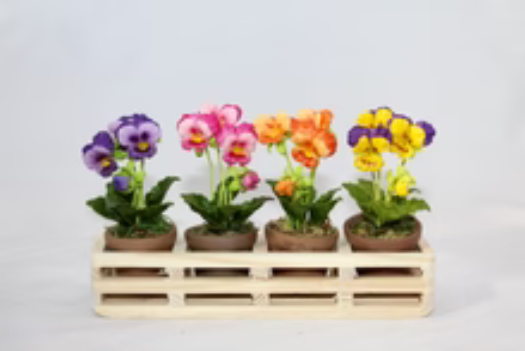
Several years ago, I bought some clay flowers at an artisan fair in Seattle. I loved these flowers – they looked so delicate, so beautiful, so breakable. My instinct was to hold them very carefully, to not let them fall, even to hide them away to prevent them from shattering or getting damaged.
So that’s what I did. I put them on a high shelf where nothing could disturb them.
But despite all of my precautions to keep them from falling, one day they fell. I was terrified. I had been protecting them for so long. I couldn’t bring myself to look, because I just knew they would be shattered on the floor. But once I finally brought myself to look, I saw them lying on the wood floor – completely in tact. They were okay.
That’s the thing that I hadn’t accounted for – these clay flowers, so delicate and beautiful, are extremely resilient, even though they don’t appear to be. Something about the way they were made resulted in them being strong, nearly unbreakable. Because I hadn’t known that, I had been protecting them fiercely. They hadn’t actually required such protection.
Is it possible that you are more like these clay flowers than you give yourself credit for? Have you been protecting yourself from something that you actually don’t need protection from? Maybe you only thought that you couldn’t handle the fall or the misstep or the breaking of the rule? Maybe you’ve been over-protecting yourself all along? Might you choose to take a risk, break a rule or accept others breaking a rule?
Give it a shot
I challenge you to see why you have the rules you have – both for yourself and for other people. Identify the fear underneath those rules. And certainly keep the rules that make sense to keep, those that are helpful to you. But if you find one rule (or more) that you don’t need to hold on to, try loosening your grip on it.
Break the rule and observe what happens. Did your deepest fear come true or did it not?
You might just prove to yourself that you are more resilient than you’ve been giving yourself credit for.