I am angry with my family/friend and wanting to cut them off. I know that you cut off your family, so you should understand.
What do you think I should do?
The short answer is that I do not believe in cutting people off.
When people hear my story, that I no longer have contact with my family of origin, it is easy to be reductive about the situation, and to believe that I made a glib, punishing decision to quit speaking to them. It’s easy to fill in the details in your head and believe that I got mad in the moment or even over a period of years, made a quick choice, and walked away.
But that could not be further from the truth.
In fact, I never did actually cut my family off. Even though it has been almost a decade since I have attended holidays or celebrations of any sort with them; even though it has been almost a decade since we have had what anybody might consider a traditional familial relationship, the cut off never happened.
What I did do is I made a choice to honor myself first and foremost and more than I had previously.
For many years, I had been playing small and begging them to see me clearly, to see me as I was increasingly able to see myself, and almost a decade ago, I stopped begging and just started living my life.
A cut off is characterized by a refusal to engage. Yet I have engaged repeatedly and continue to do so, albeit rarely.
I have responded to each email I have received. I have opened the door when the doorbell rang. I have invited and I have accepted invitations. I have written notes and responded to notes.
A cut off is characterized by a belief that nothing will or can change, and I, perhaps foolishly, believe that there is always hope for change.
I have spent my life inspired by stories of transformations, and I continue to believe in them completely.
What changed is that I started to accept the reality of the present, while I also chose to prioritize myself and my needs.
I did not cut anybody off. Rather, I communicated a firm boundary, where I had previously been completely boundary-less.
My boundary is firm, but kind.
My boundary is that I want realness and honesty before I am willing to re-engage in any meaningful way.
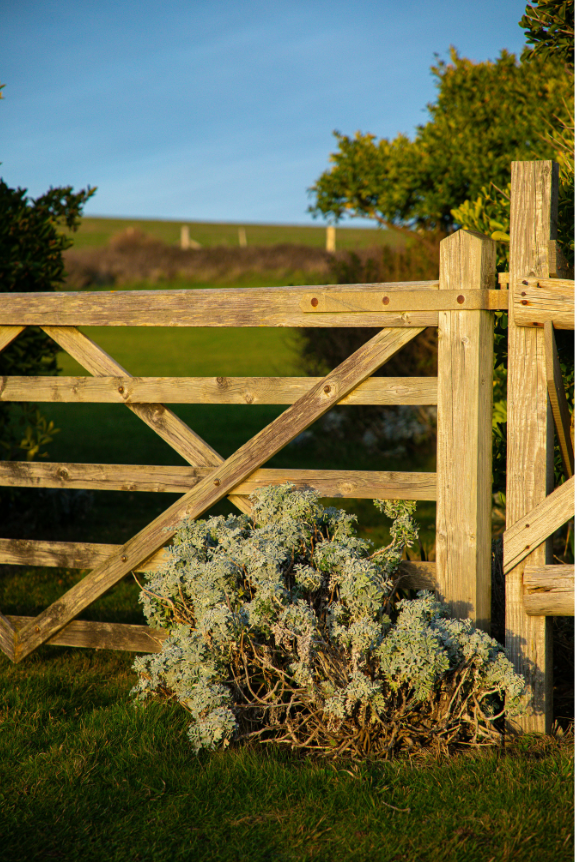
Imagine this newly erected boundary as being a wooden fence that I built around my property, a fence that contains an unlocked, but closed, gate. Building this type of a boundary is more of a guideline, marking the boundary of my property, than it is an impenetrable wall.
A cut off would be more akin to building a tall chain-link fence, perhaps even with razor links at the top, and no accessible gate.
But what I built was a standard wooden fence with an unlocked gate, and as it turns out, that fence was enough to deter them.
So, no, I do not think that you should ever choose to cut anyone off. A cut-off carries with it a silent grudge, an inherent closedness, that I cannot advocate for in any situation. Cutting somebody off carries with it an energy of anger rather than one of love. The decision to cut someone off allows for no hope of redemption, no change of heart, and no room for growth. And I believe in redemption and growth and forgiveness deeply and completely.
What I do support is you choosing your self and choosing to prioritize your needs. Choosing your self is best paired with holding yourself to a high standard of personal behavior and openness. Importantly, choosing your self is wholly unrelated to anything about anybody other than yourself. Rather it is making a positive choice to maintain a standard of honesty and authenticity for yourself and for those around you. While it might end up resulting in the same broken relationships, the spirit in which this choice is made is vastly different than the spirit in which the choice is made to cut somebody off.
Choosing yourself is open, while cutting others off is closed.
Choosing yourself radiates love, while cutting others off radiates anger.
Choosing yourself lets your light out into the world, while cutting others off seals your light off behind a closed door.
For many years I had no boundary at all, and these were years filled with chaos and confusion. I spent those years focusing on other people, trying to make other people happy. I spent those years trying to improve myself based on others’ complaints about me. I spent those years taking in the criticisms of others and holding them close to my heart, believing them or fearing them to be true. I spent those years attempting to transform myself completely, attempting to wipe away the very characteristics that others seemed to despise.
During this time, my family was often angry with me for one reason or another. They believed that I had been ruined at a very young age (between the ages of 2 and 4, depending on the story that’s being told) and they carried that as our family story throughout my lifetime. When they would roll their eyes at me or ignore me or otherwise become outraged with me, I would wait both patiently and impatiently for them to move past their negative feelings toward me. I would alternate between apologizing to them, raging at them and begging them to see me. Along the way, I taught myself to be self-deprecating, wanting to beat them to the punch so that I could gain some level of acceptance. Eventually they would reach out after weeks or months or sometimes even years of punishing silence, and I would be relieved to have regained the connection, simply grateful to have any relationship at all.
During those years when I had no boundaries, I spent a massive amount of time and energy improving. I also spent an incredible amount of time and energy attempting to convince them (and others) that I was good, that I wasn’t ruined after all. But they had told themselves this story for too long to be easily swayed from believing it. The version of me that they had concocted for themselves scarcely resembled me as time went on, but they didn’t stop to question it. So convinced were they that they knew me better than I knew myself that they didn’t bother to stay curious or talk with me. Rather they stubbornly claimed they knew me better than I knew myself.
Believing that I could prove them wrong, I spent too much time and energy fighting against their false beliefs about who I was, trying vehemently to dismantle this mirage of me that they believed so adamantly was the real thing. I believed that if I just tried a little harder, the would see me clearly and then everything would be better.
So I tried and tried to become a better person.
But they were not listening. They were not curious. They were closed-off.
Many people have asked me why I continued to stay close, why I continued to try, despite the repeated failed attempts. I would respond with, because I am forgiving. I am a good person, I would say. I am not perfect either and we all deserve grace and love and kindness. Once I shed my old skin and am the best possible version of myself, things are bound to get better. Also, this is my family – if I don’t have my family, what do I have?
And I am forgiving and I am a good person even still.
It is true that I am not perfect either and we do all deserve grace and love and kindness. Importantly, though, I needed to first offer these things to my own self.
What changed was that I started to accept that things were not bound to get better because that depended on them becoming more open and I didn’t have the power to change their hearts. No amount of improving and growing on my part was going to be enough because it was never about me to begin with as much as I thought it was.
And ultimately and painfully I realized that if I don’t have my family, this family, maybe I actually stand to gain my real self.
This is when the pain of continuing on became greater than the pain of changing. The pain of continuing to live without boundaries became greater than the pain of building the fence. And the pain of living with the constant disapproval became greater than the pain of venturing out on my own.
So this is when I stopped shouting and trying to convince and started building my fence.
And it was a rough transition. I was justifiably angry and exhausted from all my attempts to convince, improve and create the family I had always wanted. From the outside, some likely experienced this me breaking down, I did. But the breaking down was necessary in order for me to break free.
When I finally chose to put down my megaphone and stop trying so hard to be heard, when I finally chose to put down my sword and stop defending myself, when I finally chose to stop trying so hard to convince them to see me clearly, this is when I was able to make the choice to turn and start living my life.
While I have stopped trying to force closeness, I remain open. When I built this fence, I communicated that I would be open to a relationship when they could reach out to me ready to see me without all the preconceived overlays and filters they had held on to for so long. And I assure you that if that happens, if they do ever choose to reach out to me with curiosity rather than judgment, I stand ready to reconnect.
I did not choose estrangement; I chose myself and estrangement resulted.
I did not cut them off; I simply chose to break our relational pattern.
I stopped begging them to see me clearly; instead I chose to see my own self clearly.
In fact, it turns out it was never my responsibility to convince them of my goodness – only they have the power to remove the filters from their own eyes.
So back to your question – do I think you should cut this person off that upset you? No, I do not.
Instead, focus your energies on becoming the best version of yourself that you can be.
Focus on acting with integrity even when those around you aren’t doing so.
Focus on becoming a person of whom you can be proud.
Learn to treat yourself with as much kindness as you treat others.
Build your own reasonable fence, but keep the gate unlocked.
If estrangement, temporary or permanent, happens naturally, then so be it.
But stay open, because miracles are possible.